
How to Conduct Keyword Research for SEO

If you want to know how to conduct keyword research, the short answer is this: start with what you actually offer, expand that into real search terms, check what Google is rewarding, and then map the right keywords to the right pages. Good keyword research is not just a list of phrases. It is a planning process that helps you build pages around relevance, intent, and business value.
This guide is written for small business owners and marketing beginners who want a clearer process to follow. If you want a broader overview of SEO first, you can also read our SEO Guide.
To keep this grounded, I am going to use an accountant’s website as the main example throughout this article. The process can be applied to almost any business, but this gives us a clear way to work through each stage.
Key Takeaways
Keyword research should start with the services, products and questions that are already relevant to the business.
Good keyword research is not about collecting as many phrases as possible, it is about finding terms that match relevance, intent and business value.
Google suggestions, related searches and SEO tools can help expand a keyword list, but the results still need to be filtered carefully.
Checking the live search results helps show whether a keyword suits a service page, blog post, guide or location page.
Keyword clustering helps group similar phrases together so you do not create lots of overlapping pages.
Keyword mapping turns research into a practical plan by assigning the right keyword groups to the right pages.
Start with your services, products, and customer questions
List what you actually offer
The first step in keyword research is much simpler than people expect. Start with the services, products, or subject areas your business already offers. Before you open any tool, write down what you actually do.
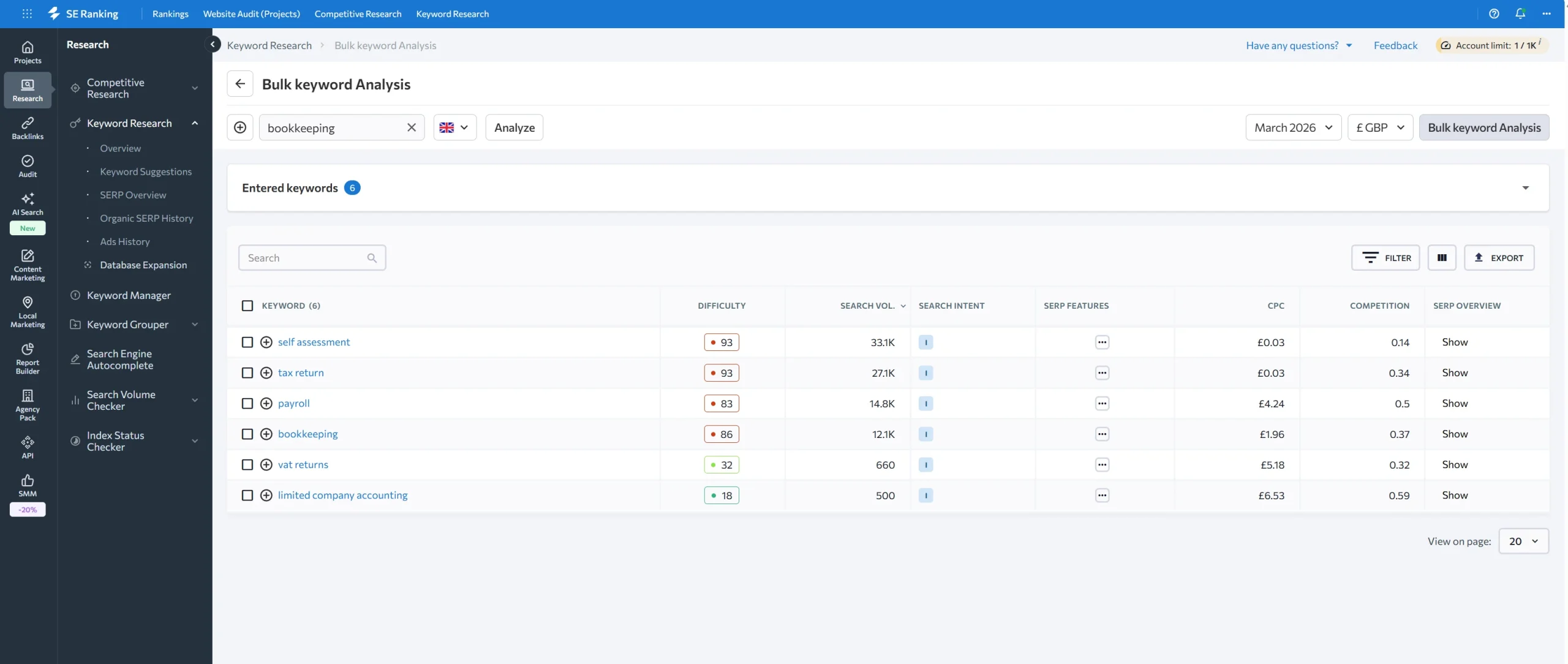
Using the accountant example, that might include tax returns, bookkeeping, payroll, VAT returns, self-assessment, and limited company accounting. These are not your final keywords yet, but they are the starting point for your research.
A lot of businesses go wrong here because they begin too broadly. They jump straight to terms like “finance”, “business support”, or “tax help” without first defining the actual services they want to sell. That makes the rest of the process messy because the starting point is vague.
If you need a clearer explanation of the basics before moving into the research process, our guide on what are keywords in SEO and why do they matter is a useful place to start.
Write down the questions your audience is already asking
The next place to look is your own customer conversations. Think about the questions people ask by email, phone, contact forms, and sales calls. These questions often reveal what your audience really wants to know, and they can lead to useful keyword themes.
For an accountant, that could include questions like “Do you offer limited company accounting?”, “Can you help with bookkeeping for a small business?”, or “Do you provide payroll services?” These kinds of questions are more commercial in nature and can point much more directly towards service page themes and core keyword targets.
Use these ideas as your starting keyword themes
At this stage, you are not trying to perfect the list. You are creating keyword themes. In the accountant example, that could mean one theme for bookkeeping, one for payroll, one for tax returns, and one for limited company accounting.
This gives you a much stronger foundation than random brainstorming because the ideas are tied to real services and real audience interest. That is the difference between guessing and doing structured research.
Build a list of keyword ideas
Use Google search suggestions and related searches
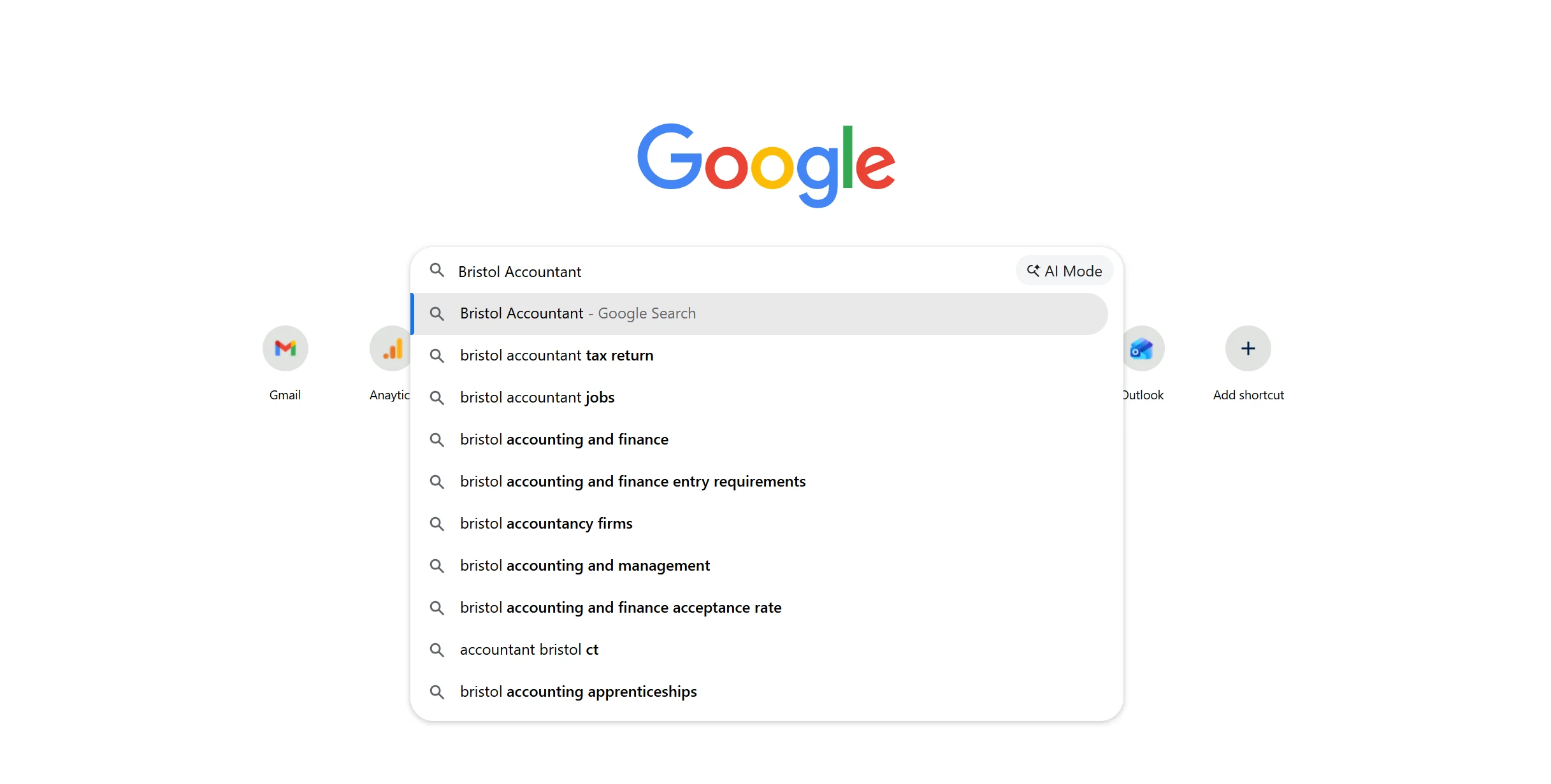
Once you have your starting themes, you can begin expanding them. One of the easiest ways to do that is by using Google search suggestions and related searches. When you begin typing a phrase into Google, the suggestions often show how people commonly phrase their searches.
If we start with “bookkeeping”, Google may suggest variations like “bookkeeping services”, “bookkeeping for small business”, or “bookkeeping accountant near me”. These are useful because they show how the broad theme starts turning into more specific phrases.
Related searches can help in the same way. They often reveal longer or more refined versions of the original idea, which can be useful when you are building a wider list.
Use SEO tools to expand your keyword list
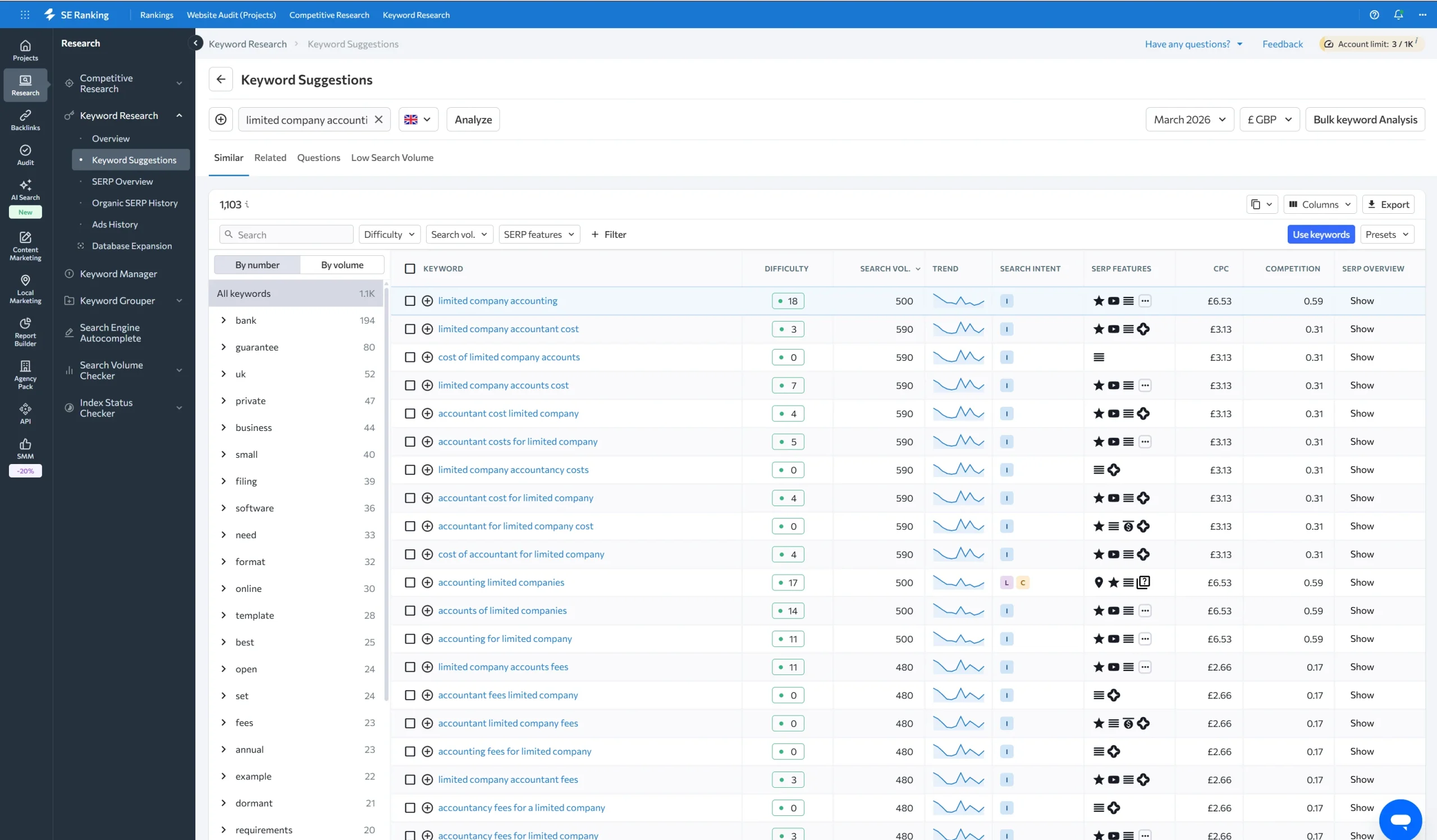
This is where tools can help you scale the process. If you are using SE Ranking, you can take your starting accountant themes and expand them into a larger list of related phrases, variations, and topic ideas.
Google Ads says Keyword Planner can be used to discover new keywords and see estimates on the number of searches a keyword gets each month. That is useful because it helps you move beyond your first few obvious ideas and start seeing how demand is distributed across a topic.
In practical terms, this is where your accountant list could grow from “bookkeeping” into terms like “bookkeeping services for small business”, “outsourced bookkeeping”, “bookkeeping for limited companies”, and other related variations.
Look for keyword phrases with clear relevance
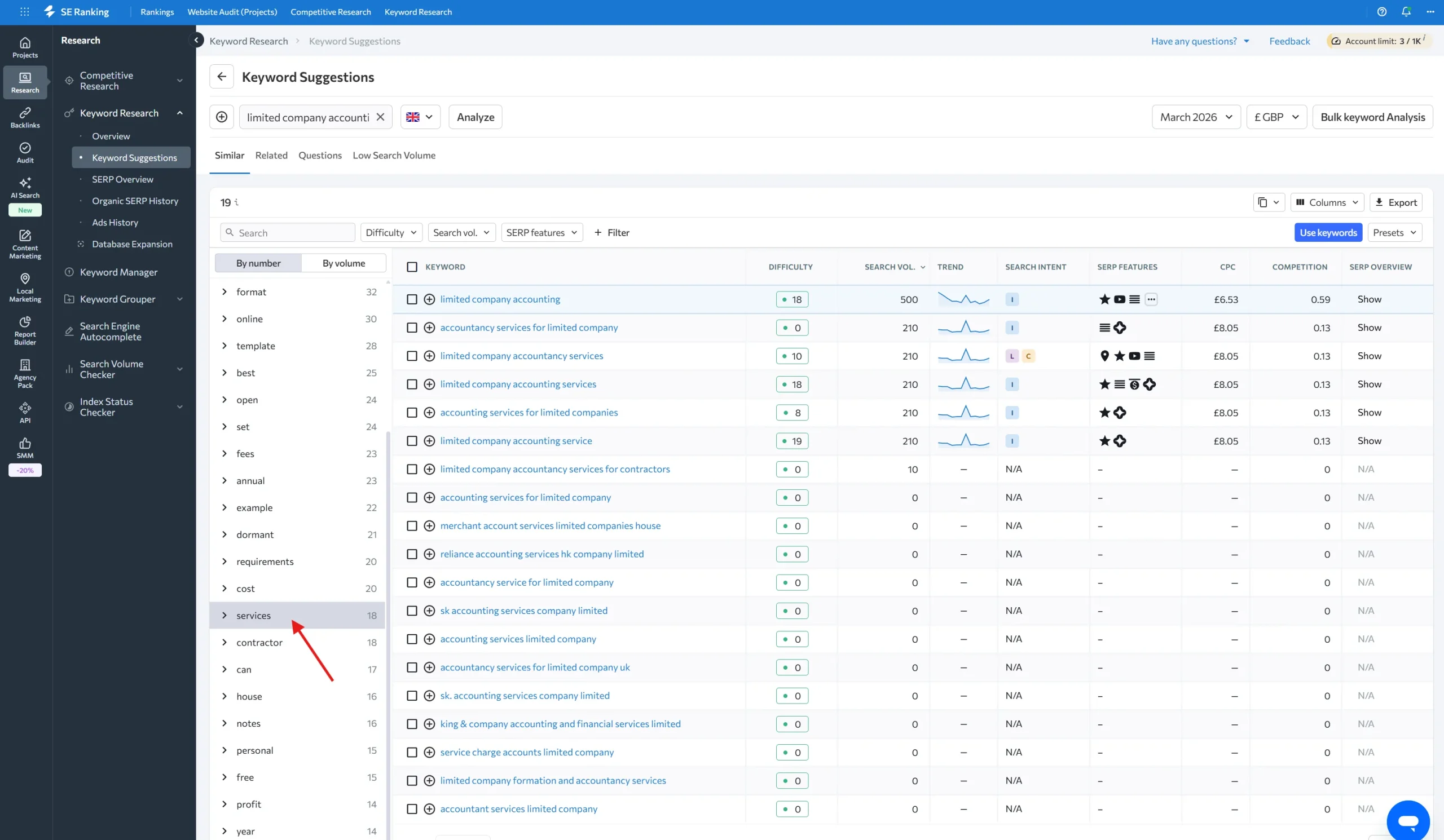
This step matters more than many people realise. Not every phrase that appears in a tool deserves to stay on your list. Some terms will be too broad. Some will be loosely related but not commercially useful. Some may match the wrong type of business altogether.
For example, an accountant might see phrases related to bookkeeping software, bookkeeping jobs, or accounting courses. Those may have search volume, but they are not necessarily good targets for an accountancy firm trying to attract clients.
The goal here is not to collect as many phrases as possible. It is to build a list that is clearly connected to the services you offer and the topics you want your website to cover.
Check what Google is already rewarding
Search the keyword manually before choosing it
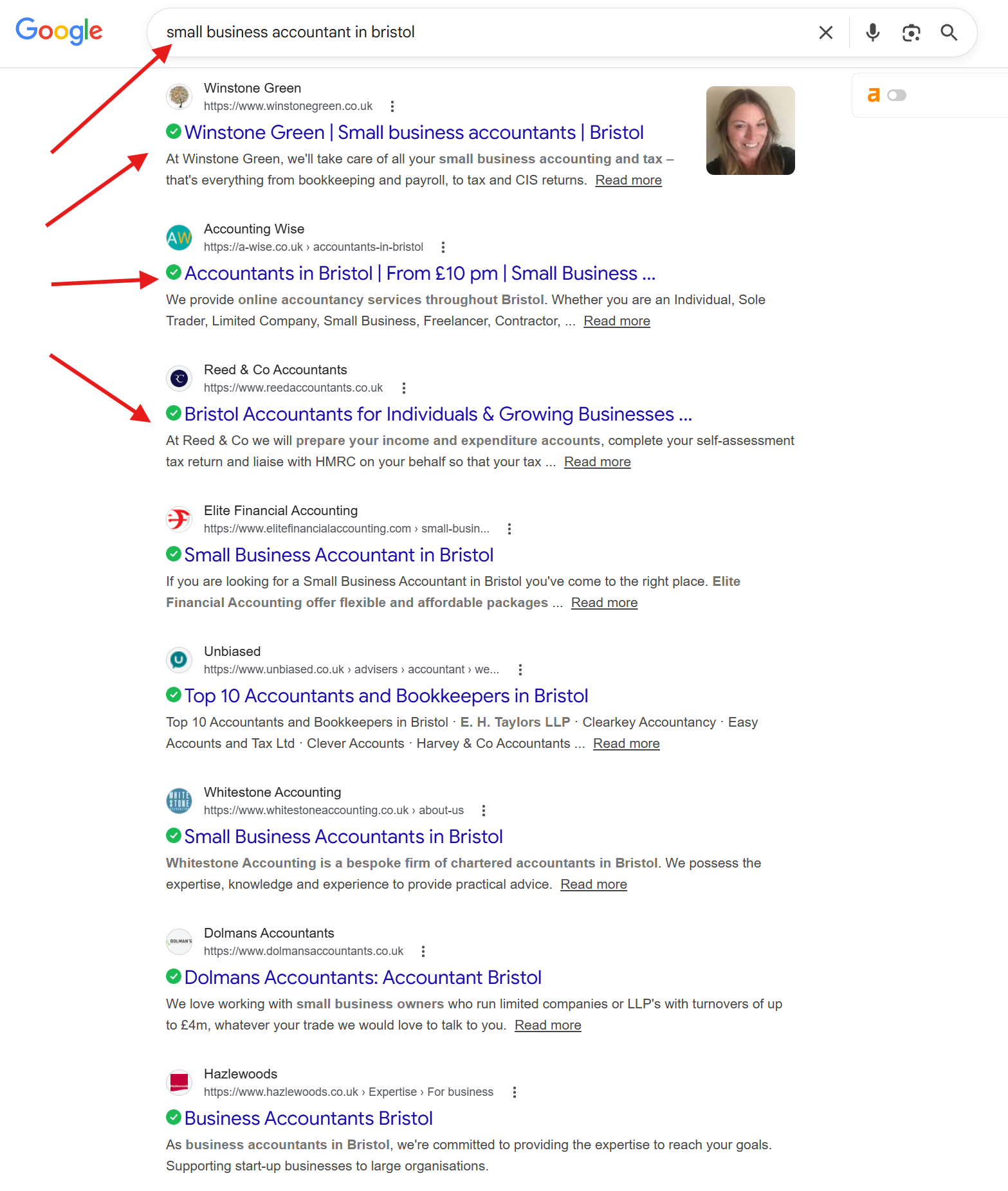
One of the most important steps in how to conduct keyword research is checking the live search results before you commit to a target. This shows you what Google is already rewarding for that query.
Take a phrase like “small business accountant”. Search it manually and look at the types of pages ranking. Are they service pages? Are they location pages? Are they directory pages? Are they blog posts? The answer tells you what kind of result Google currently sees as the best fit.
The same applies to phrases like “bookkeeping services” or “self-assessment accountant”. A search might reveal a very local set of results, a mix of commercial service pages, or a broader national landscape.
Check whether your planned page matches the results
This is where a lot of weak targeting starts to show. If the search results are mostly service pages and you are planning a blog post, that is usually a sign of mismatch. If the results are mostly educational guides and you want to target the phrase with a money page, that can also be a warning sign.
Google’s SEO Starter Guide explains that SEO is about helping search engines understand your content and helping users decide whether they should visit your site. That matters here because a page is more likely to perform well when it fits the kind of result both Google and the searcher expect to see.
Check the search intent behind the keyword
You do not need to overcomplicate this step. In most cases, you are simply asking what the searcher is trying to do.
At this stage, the goal is not to map the keyword to a page yet. It is simple to understand whether the search looks commercial, informational, local, or something else before you move further into planning.
This is worth checking before you commit to a page because it gives you a clearer sense of what kind of result the searcher is expecting.
Use this step alongside data
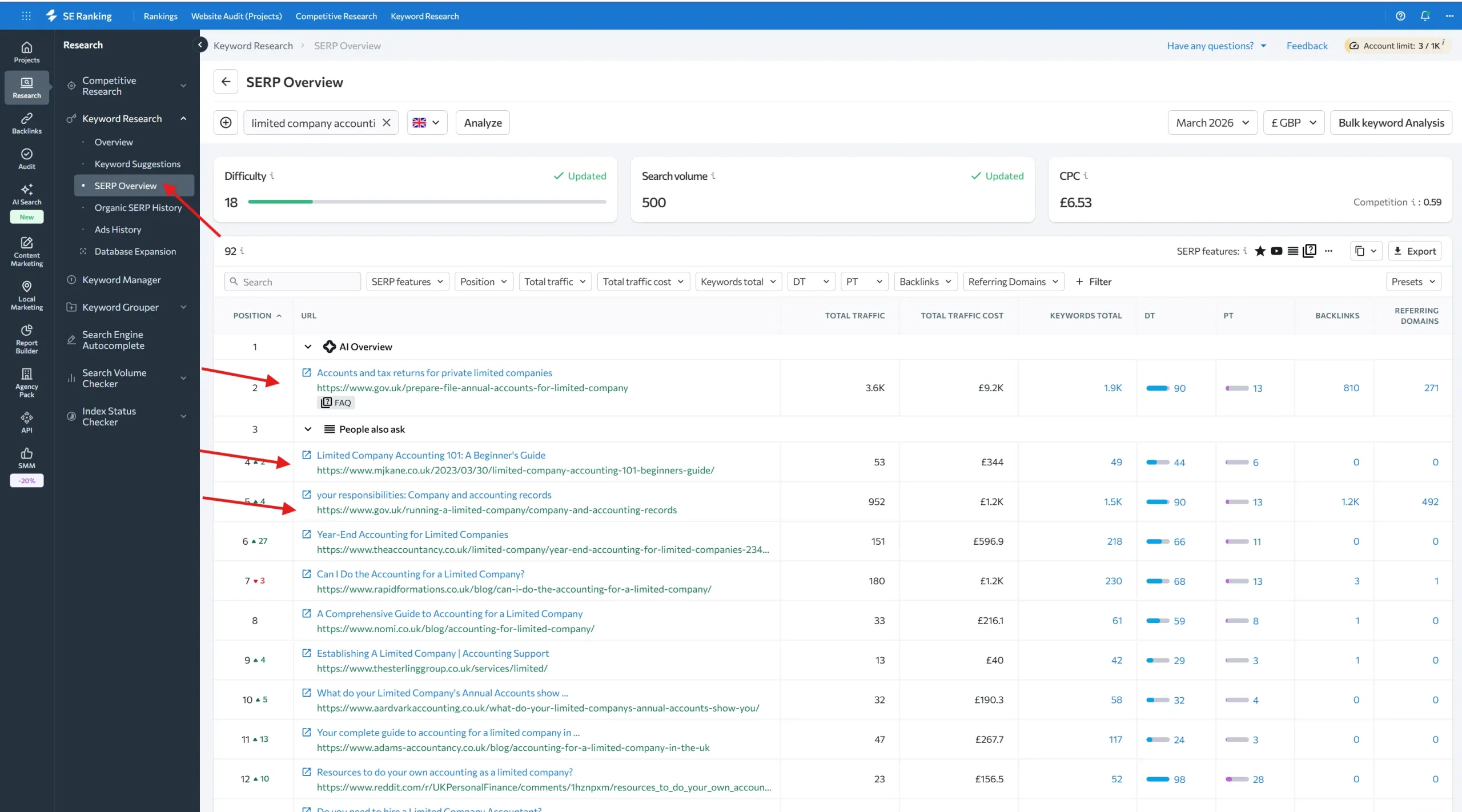
Tool data becomes much more useful when you combine it with real search results. SE Ranking can show you search estimates, keyword difficulty, and other metrics, but the live SERP tells you what format is already working.
That is why this step should not be skipped. A keyword may look attractive in a tool, but the search results may show that your planned page type is completely wrong for it.
How to choose keyword targets
Compare search volume, relevance, and competition
This is where people often start looking for one perfect metric, but there is rarely one number that makes the decision for you. Instead, you need to balance three things: search demand, relevance, and competition.
A keyword with strong demand but weak relevance is usually a poor target. A highly relevant keyword with no realistic chance of ranking may also be a poor choice for now. Good targeting sits somewhere between what people search for and what your site can realistically compete for.
This is also where the secondary phrase of how to choose keywords becomes part of the real process. You are not choosing a term because it looks popular. You are choosing it because it fits the service, the page type, and the opportunity level.
Avoid choosing keywords just because they have high volume
High numbers can be tempting, but they can also be misleading. Broad phrases often look attractive because they appear to offer more traffic, but they can be vague, competitive, or poorly matched to the page you want to create.
An accountant might be tempted by a broad phrase like “accounting”, but that term could bring all kinds of mixed intent. It may include students, software users, job seekers, and people looking for definitions. A more specific phrase such as “small business accountant” or “limited company accountant” may bring less traffic on paper, but it is often much more aligned with the audience the business actually wants.
This is especially important when you are weighing up competitive keywords. Not every keyword that looks valuable is worth targeting first. Sometimes the better move is to choose something more focused and more realistic.
Pick keywords that match the page you want to create
By this point, you should already be thinking about page type. A keyword should not be chosen in isolation. It should be chosen with a destination in mind.
If the phrase suits a core service page, plan it that way. If it clearly fits a blog post or guide, treat it as supporting content instead. This is one of the biggest differences between a tidy seo keyword strategy and a random list of keyword ideas.
How to find competitor keywords
Review which keywords similar businesses are targeting
When people ask how to find competitor keywords, the starting point is not the biggest brand in the market. It is the businesses that are actually competing for the same audience, services, or locations.
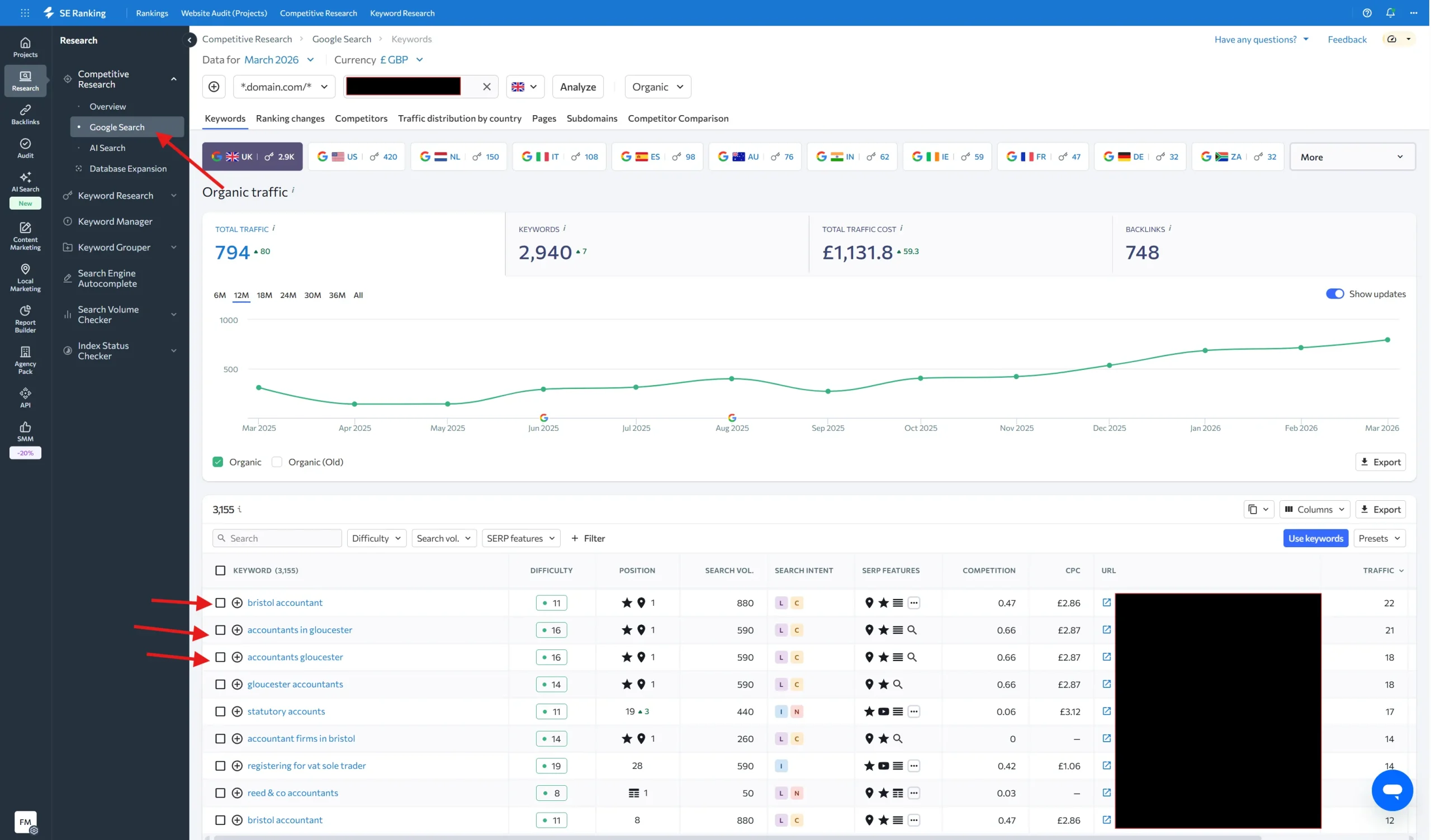
In the accountant example, that means looking at similar accountancy websites rather than huge software brands or national directories with a very different business model. Review the types of pages they have created, the way those pages are titled, and the subjects they cover.
This helps you spot patterns. You may notice that several competitors have dedicated pages for limited company accountants, bookkeeping services, and self-assessment support. That does not mean you should copy them blindly, but it does show what the market is consistently targeting.
Look for gaps and realistic opportunities
This is where competitor research becomes useful rather than distracting. You are not trying to collect every phrase other websites rank for. You are trying to find themes, gaps, and realistic opportunities.
Maybe several accountants in your area have strong service pages but very weak blog content. Maybe they all target bookkeeping and payroll, but very few have built useful guides for small business owners. That kind of gap can shape your content plan.
This is the practical side of how to find competitor keywords. The value is not in copying a list. The value is in seeing where your site can be more focused, more useful, or better structured.
Do not copy a competitor’s strategy without filtering it
Competitor research needs judgment. Different sites have different authority levels, different services, different audiences, and different content gaps. A keyword that suits another business may not suit yours.
This is one reason Search Engine Journal describes keyword mapping as the process of assigning a keyword to each page and arranging pages into keyword clusters. The point is to create a structure that fits your own website, not to mirror somebody else’s.
Decide what type of page the keyword belongs to
Decide whether the keyword suits a service page, blog, guide, or location page
Before you move into keyword mapping, decide what kind of page each keyword really belongs to. By this stage, you should already have a sense of intent from the search results, so the job here is to turn that into a practical page plan.
This is where the examples matter more. A phrase like “limited company accountant” is likely to belong on a core service page because the search is commercially focused. “Bookkeeping services Bristol” is more likely to belong on a location page because the local intent is clear. “What does an accountant do for a small business?” would usually suit a blog or guide because the search is more informational.
This step helps prevent a common mistake where one website tries to force every keyword onto a service page, even when the search clearly points towards a different type of result.
For online stores, the same principle applies to category and product keywords. Broader searches may belong on category pages, while specific product names, models and variations usually need focused product pages. Our guide to how to optimise product pages for search explains how to apply keyword research at product level.
Do not create a new page for every variation
Not every keyword needs its own page. If you create a separate page for every slight variation, you can end up with thin pages, overlapping content, and a confusing structure.
Some terms belong together because they share the same intent. Others deserve separate pages because the searcher is expecting something different. The job here is to make that distinction before you start publishing.
Keep the page purpose clear from the start
The clearest keyword targets usually sit on the clearest page types. Once you know whether a phrase belongs on a service page, guide, blog, or location page, the rest of the planning becomes much easier.
That is one of the reasons strong research supports both SEO and website structure. It helps you avoid building the wrong page in the first place.
Group related keywords together
Use clustering keywords to avoid overlap
This is the stage where clustering keywords starts to matter. Keyword clustering means grouping together phrases that are closely related and share the same intent.
For the accountant example, “small business accountant”, “accountant for small business”, and “small business accounting services” may all belong in the same cluster if they point to the same type of page and the same search intent.
This is often where beginners realise that keyword research is not about chasing dozens of separate pages. It is about understanding which terms belong together and which do not.
Turn similar terms into a one-page plan
Once you group similar phrases together, you can plan a stronger page instead of a collection of weaker ones. This helps you avoid publishing multiple pages that all compete for the same space.
It also helps with targeting keywords more cleanly. One primary term can lead the page, while closely related variations and supporting phrases help build context around it.
Use a keyword grouper or spreadsheet if needed
You do not need a complicated setup to do this well. A spreadsheet is often enough. If you prefer, a keyword grouper can help speed up the organisation side of the process.
The point is not which method you use. The point is that your keywords are organised in a way that makes page planning easier. By this stage, you should be moving from a raw list into clearer clusters and themes.
Map keywords to the right pages
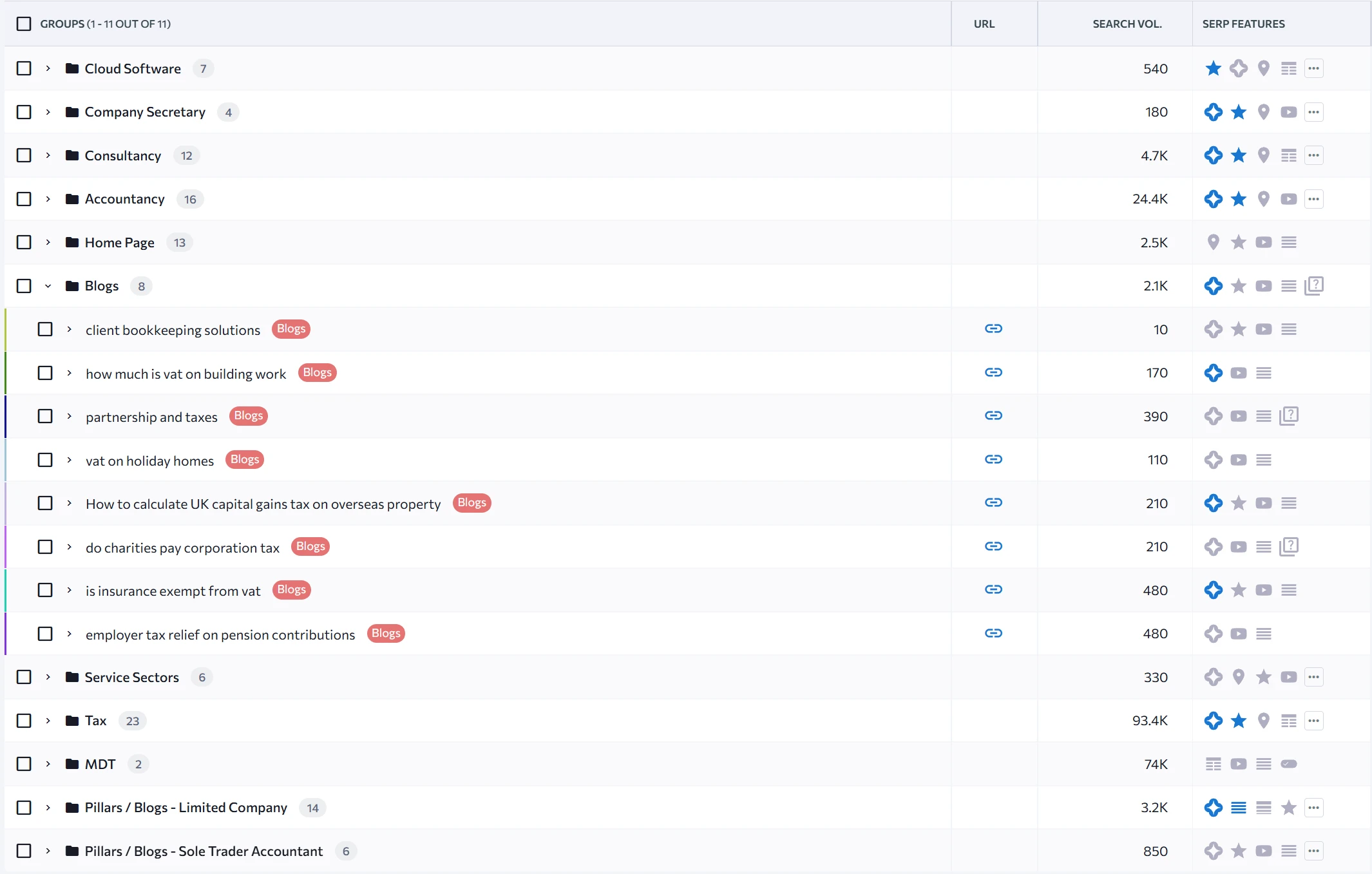
Use keyword mapping across service pages and blogs
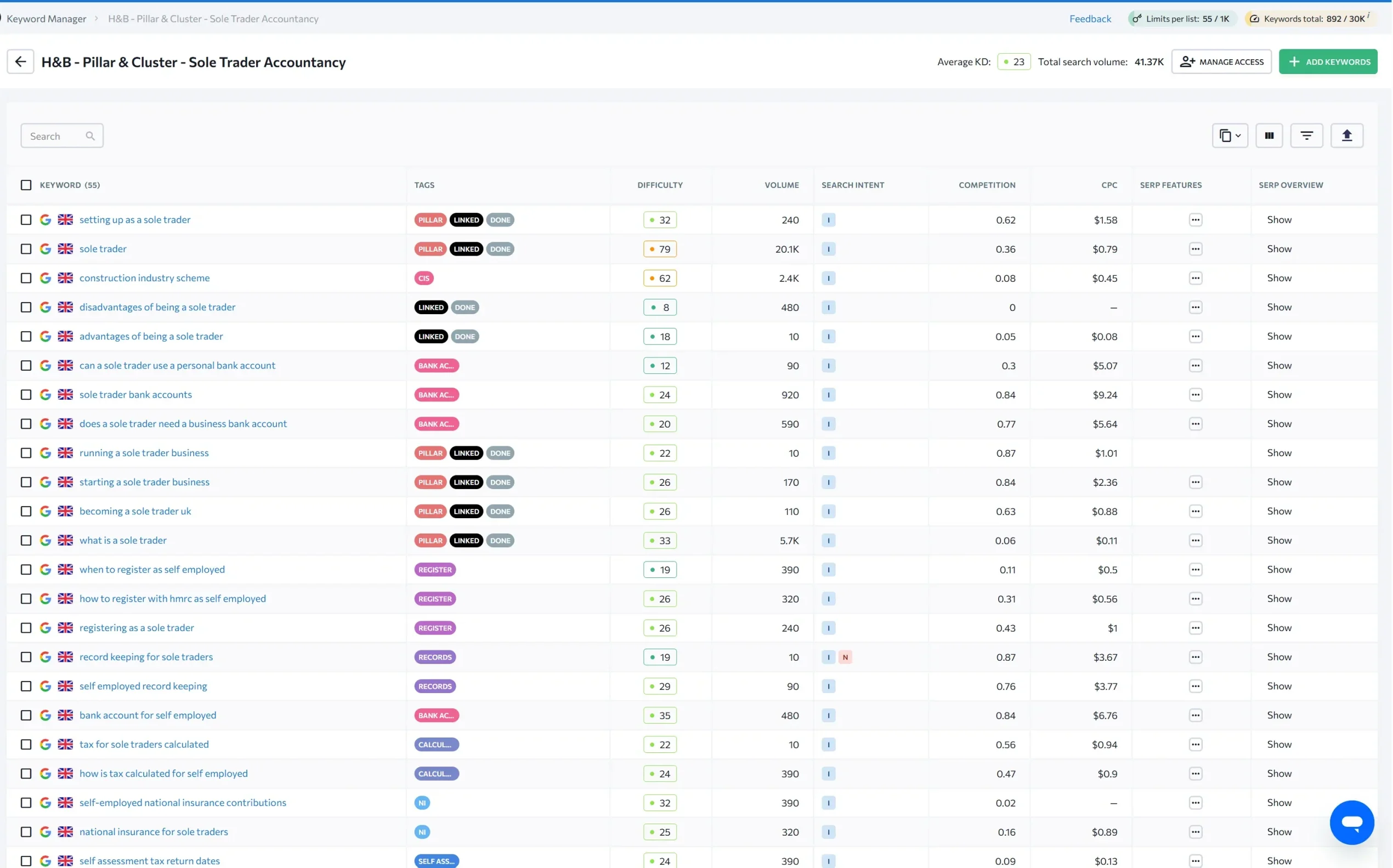
This is where keyword mapping becomes practical. Keyword mapping means assigning keywords or clusters to the pages where they make the most sense.
For the accountant example, your core services might map to pages like bookkeeping services, payroll services, self-assessment support, and limited company accounting. Supporting blog topics might include questions about deadlines, tax responsibilities, or bookkeeping basics for small businesses.
This is also where you begin to separate core commercial pages from supporting educational content. That is a key part of any good keyword strategy.
Assign one primary keyword and supporting terms to each page
Each page needs a clear central target. That does not mean using only one phrase, but it does mean choosing one main direction for the page. This is an important part of how to conduct keyword research well, because the goal is to match the right keyword set to the right page rather than forcing too many services into one place.
For example, a bookkeeping page may lead with “bookkeeping services” as the primary keyword, while also covering supporting terms around small business bookkeeping, outsourced bookkeeping, and bookkeeping support. This gives the page a clear focus without making it narrow or repetitive.
That is a much stronger approach than trying to make one page rank for every accounting service at once.
Avoid targeting the same keyword on multiple pages
When the same keyword is pushed across several pages, the site can start competing with itself. This is where cannibalisation becomes a real risk.
Clear mapping helps stop that from happening. If each page has a defined purpose, a primary target, and a set of supporting terms, the site becomes easier for search engines to interpret and easier for users to navigate.
What your finished keyword research should look like
A cleaned keyword list with grouped themes
By the end of the process, your keyword research should not look like a giant export full of every phrase the tool suggested. It should look filtered and usable.
For the accountant example, that might mean grouped themes for bookkeeping, payroll, self-assessment, limited company accounting, VAT returns, and small business advice. Irrelevant or low-value phrases should be removed.
Clear page targets and keyword mapping notes
A finished research document should also show which page each keyword cluster belongs to. That is what turns keyword ideas into a working plan.
This is where the practical side of seo keyword strategy starts to show. The document should make it obvious which terms belong on service pages, which belong on blogs, and which may support future guides or location pages.
Priority order and next actions
Not every target needs to be tackled immediately. A strong final document should help you see what to prioritise first.
For example, the accountant’s website may choose to prioritise high-value service pages first, then add blog content that supports those areas. That is much more useful than ending the process with a spreadsheet full of disconnected ideas and no clear order. The next step is turning that research into a wider plan, which I cover in our guide to building an SEO content strategy.
Common keyword research mistakes to avoid
Targeting keywords that are too broad
Broad terms often look appealing because they seem bigger, but they are not always better. They can hide mixed intent, attract the wrong audience, or be far too competitive for the site.
Choosing terms that do not match user intent
A keyword can look relevant on paper and still be the wrong fit for the page. If the intent does not match, the page is likely to struggle, no matter how well written it is.
This usually happens when a keyword that belongs in a blog or guide is pushed onto a service page, or when a commercial term is targeted with purely informational content.
Creating pages before the research is done
This is one of the most common problems I see. Pages get built before the keyword planning is sorted, which leads to overlap, weak targeting, and messy site structure. It is much easier to create the right pages once the research is detailed.
Final thoughts
If you would rather turn that research into a practical plan with professional support, my SEO services in Bristol cover keyword targeting, page planning and the wider optimisation work needed to put the research into action.


FAQs
01
What is keyword research in SEO?
Keyword research is the process of finding and evaluating the words and phrases people use when searching for topics related to your business. It helps you understand demand, intent, and which pages your website may need.
02
How do I choose the right keyword for a page?
Start by looking at relevance, intent, and realism rather than volume alone. The best keyword is usually the one that closely matches the page’s purpose and the audience you want to reach.
03
What is keyword mapping?
Keyword mapping is the process of assigning keyword targets or clusters to specific pages on your website. It helps prevent overlap and gives each page a clearer purpose.
04
How do I find competitor keywords?
Look at the pages similar businesses are targeting and review the themes they consistently cover. The goal is not to copy every term, but to spot useful gaps, patterns, and realistic opportunities.
05
What is the difference between keyword clustering and keyword mapping?
Keyword clustering is about grouping related phrases together based on shared intent or topic. Keyword mapping is the next step, where those grouped terms are assigned to the pages where they belong.
Author Bio

Fred Morpeth
Table of Contents