
What Are Backlinks in SEO and Why Do They Matter in 2026?

What Are Backlinks in SEO? In simple terms, backlinks are links from one website to another, and when another site links to yours, search engines can use that as one signal to help understand relevance, trust, and visibility.
For business owners, the easiest way to think about backlinks is this: if a relevant website mentions and links to your business, that can support your SEO and sometimes send direct traffic too. If you want help with the wider picture, my SEO guide explains how links fit alongside content, technical SEO, and site structure.
Key Takeaways
Backlinks are links from other websites to your website, and they can help search engines understand trust, relevance and relationships between pages.
Backlinks can also bring referral traffic when they come from websites your audience actually uses.
A good backlink is usually relevant, trustworthy and useful in context, not just placed somewhere for the sake of SEO.
Follow, nofollow, sponsored and UGC links can all appear in a link profile, but they do not all pass signals in the same way.
Quality matters more than quantity because weak or unrelated links are unlikely to help and can make a backlink profile look unnatural.
Backlinks work best when they support pages that are already useful, well structured and worth visiting.
What are backlinks in SEO?
A backlink is a link from another website that points to your website. You might also hear people call them inbound links or incoming links, but they all mean the same thing.
Backlinks matter because search engines use links to discover pages and to understand how pages relate to one another. Google’s own documentation explains that links help it find pages to crawl, and that it also uses links as a relevance signal. That is why backlinks have remained part of SEO for so long, even though they are only one part of a much bigger picture.
A simple definition of backlink
If you want a very plain definition of a backlink, it is this: a backlink is a clickable link on another website that sends users to your website.
For example, if a local newspaper writes about your business and links to your website, that is a backlink. If an industry blog mentions your service and includes a link to one of your guides, that is also a backlink.
What counts as a backlink on Google
A backlink on Google is not a special type of link that appears inside Google itself. It simply means a link that Google can find when it crawls the web.
If another website links to your homepage, a service page, a blog post, or a guide, that can all count as a backlink, as long as the link is crawlable and exists on a real page.
Why backlinks are also called inbound links
They are called inbound links because they point inwards to your site from somewhere else.
That helps people separate them from internal links, which move users from one page to another on the same website. Both matter for SEO, but they do different jobs.
How does backlinking in SEO work?
Backlinking in SEO works by creating connections between websites. When another page links to yours, search engines can follow that path, discover your page, and use the link as one of many clues about what your content is about and how trustworthy it may be.
That does not mean every backlink helps, and it does not mean links alone are enough to rank. It simply means links are part of the wider way search engines interpret the web.
How search engines discover links between pages
Search engines use crawlers to move across the web by following links. Google explains this clearly in its documentation on link best practices, where it says links help Google find pages and understand them more easily.
This is one reason backlinks can matter for new or less visible pages. If a trusted page links to your page, that can make it easier for search engines to discover it.
Why backlinks help search engines understand trust and relevance
A backlink can act as a contextual signal. If a reputable website in your industry links to a page on your site, that gives search engines extra information about the topic and the relationship between the two pages.
This is also why relevance matters so much. A backlink from a useful, connected source often means more than a random link from a completely unrelated website. In backlinking in SEO, context usually matters more than raw volume.
The role of backlinks with SEO performance
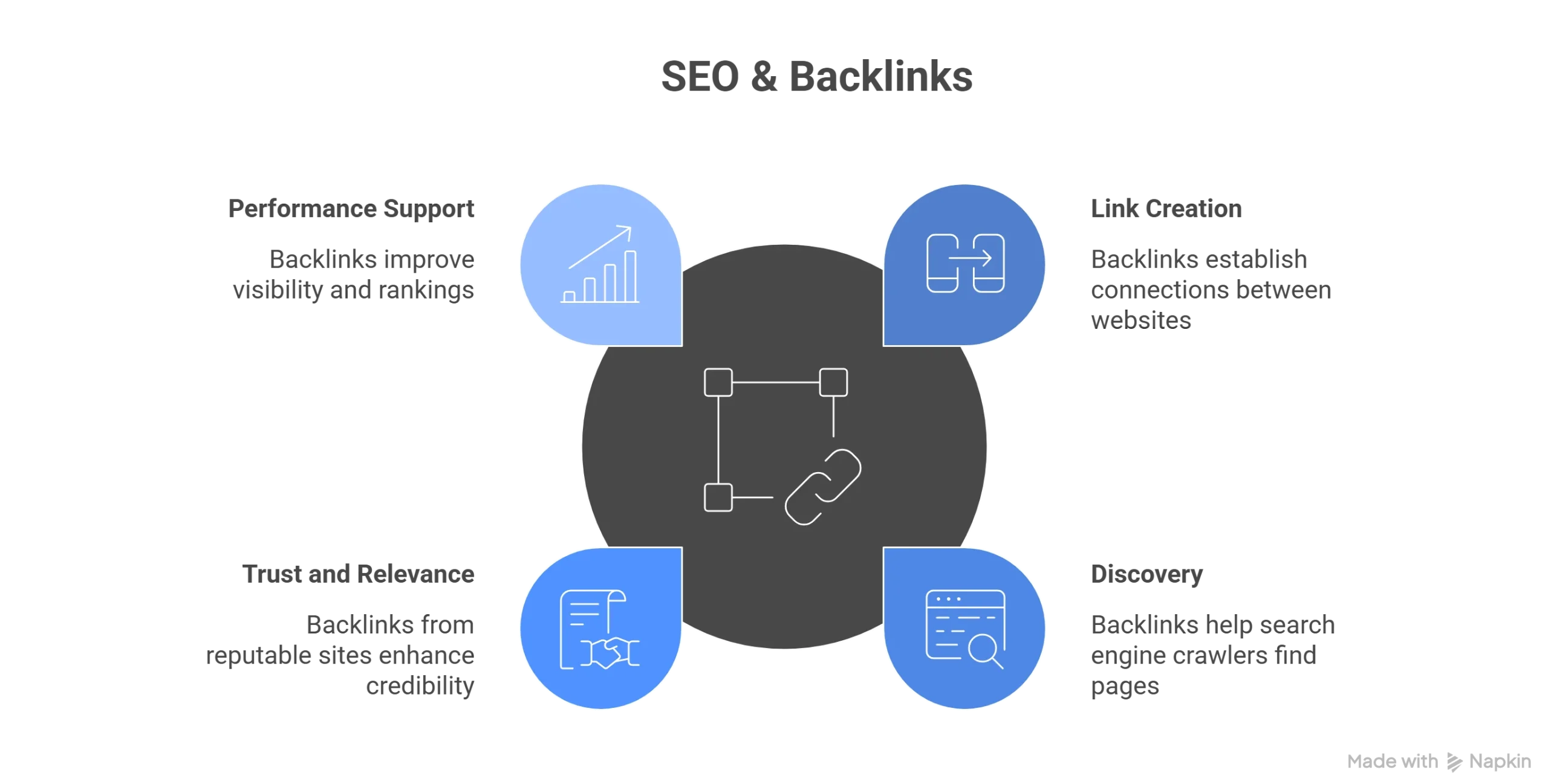
Backlinks with SEO can support rankings, visibility, and discovery.
Their impact usually depends on what they point to. A strong link is more useful when it supports a page that is already clear, useful, and relevant to the search.
Why are backlinks important for SEO?
Backlinks are important because they can support how visible your website is in search and how credible it appears. They are not the only ranking factor, but they are still part of how search engines evaluate the web.
Google’s SEO Starter Guide still makes this point clearly. It explains that PageRank uses links and is one of Google’s fundamental algorithms, while also making clear that there is much more to Search than links alone. That balance is important for business owners to understand.
How backlinks can support rankings
A strong backlink profile can support rankings because it strengthens the signals around trust, topic relevance, and authority.
This does not mean you need hundreds of links. A smaller number of relevant links from the right places can be far more useful than a large pile of weak ones.
How backlinks can bring referral traffic
Backlinks are not only about rankings. They can also send real visitors directly to your site.
If your business is featured in a trade publication, a local news story, or an industry blog, people can click that link and arrive on your website without using Google at all. In some cases, that referral traffic is highly qualified because the person already has some context and trust.
Why backlinking for SEO is about quality, not just quantity
This is where many businesses go wrong. They hear that backlinks matter, then assume more must be better.
That is not how it works. A link from a trusted industry site, a respected local publication, or a genuinely useful directory is often worth far more than dozens of weak links from low-quality websites. Good backlinking for SEO is about usefulness, relevance, and credibility.
What makes a good backlink?
A good backlink usually comes from a page that is relevant, trustworthy, and genuinely useful to the person clicking it. It sits inside content that makes sense, rather than being dropped into a random page just to create a link.
Relevant links from trusted websites
Relevance matters in more than one way.
Topical relevance
A link from a marketing blog to an SEO guide makes more sense than a link from an unrelated gambling or coupon site.
Local relevance
For many businesses, local links matter too. A backlink from a Bristol chamber of commerce, local newspaper, or trusted directory to a Bristol-based website may be more valuable than a random international site with no real connection to your business.
Site trust
A trusted website does not have to be huge. It just needs to be real, useful, and well-connected to the topic or area.
Natural anchor text and context
Anchor text is the clickable wording used for a link.
Natural anchor text usually reads like something a normal writer would use. It could be your brand name, the title of a guide, or a phrase that fits naturally into the sentence. Google’s link guidance also recommends making anchor text descriptive because it helps people and search engines make sense of the page being linked to.
Why editorial links often carry more value
Editorial links are links that appear because someone chose to include them in useful content.
These often happen through industry write-ups, genuine guest posts, PR mentions, local coverage, interviews, or useful resources being cited. They tend to carry more value because they are more likely to be relevant, contextual, and earned rather than manufactured.
Follow, nofollow, sponsored, and UGC links
Not every backlink works in exactly the same way, because some links use attributes that tell search engines more about the relationship behind the link.
Follow links
These are standard links with no special attribute added. They are the kind of links people usually mean when they talk about links passing SEO value.
Nofollow links
Nofollow links include an attribute that tells search engines the link should not be treated in the same way as a standard editorial link. That does not mean they are useless. They can still bring referral traffic, visibility, and a more natural-looking link profile.
Sponsored links
Sponsored links are used when a link is part of advertising, sponsorship, or another paid arrangement. These should be marked properly so the relationship is clear.
UGC links
UGC stands for user-generated content. These are links placed in things like blog comments, forum posts, or community content. They can still exist naturally, but they do not carry the same editorial weight as a link placed by the site owner inside the main content.
What makes a bad backlink?
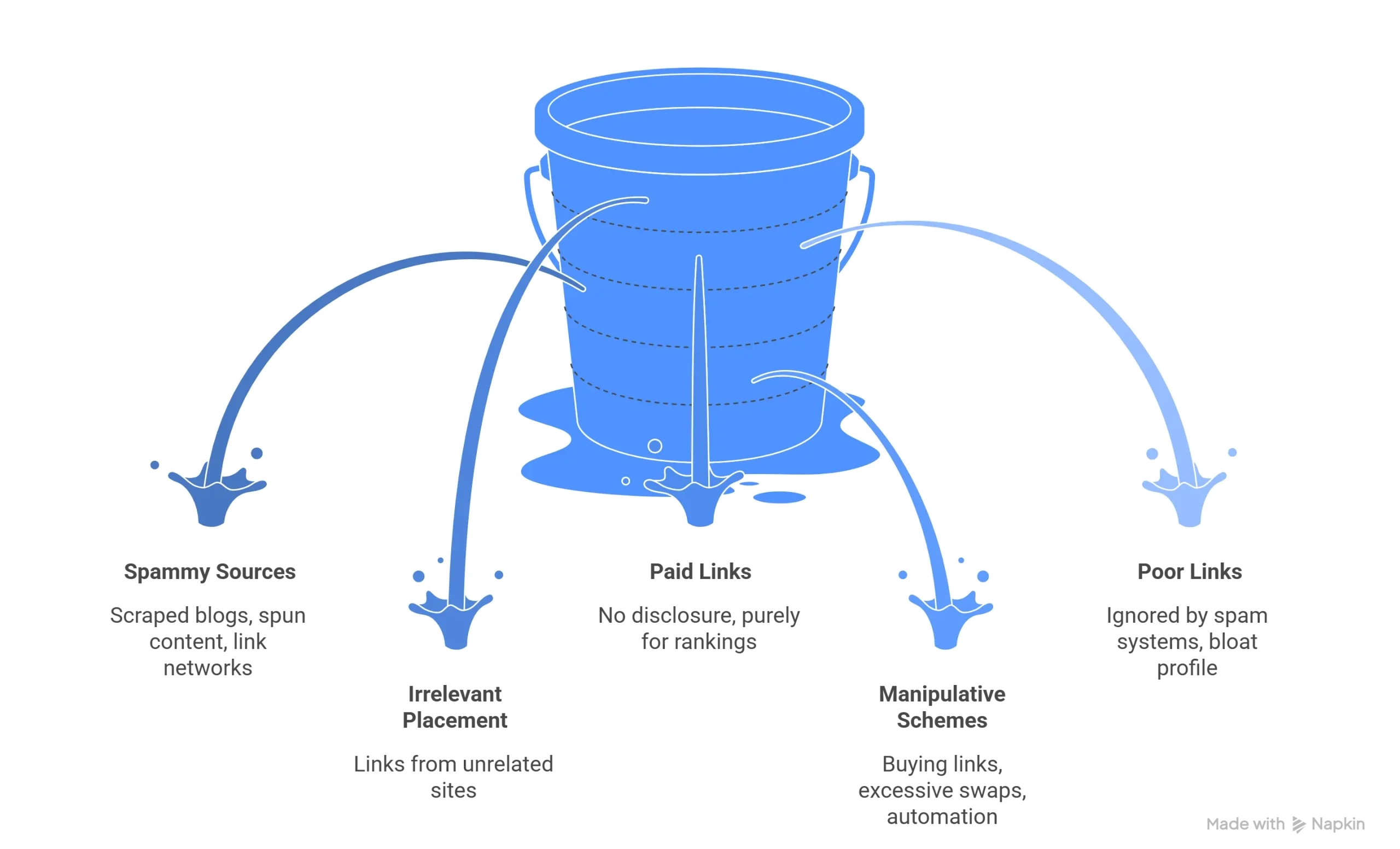
A bad backlink is usually a link that exists for manipulation rather than user value. It often comes from a weak site, sits in poor-quality content, or appears in a pattern that looks artificial.
Spammy, irrelevant, or paid links
Low-quality links often share the same traits.
Spammy sources
These may include scraped blogs, spun content sites, or networks full of pages with no real audience.
Irrelevant placement
A backlink to your accounting site from an unrelated foreign casino blog is not a good sign.
Paid links with no proper qualification
If someone is selling links purely to influence rankings, that moves into risky territory.
Link schemes and manipulative backlinking in SEO
Google’s spam policies are very clear that manipulative link schemes are against its rules.
This includes tactics like buying large volumes of links, excessive link exchanges, automated link building, private blog networks, or creating links at scale purely to manipulate rankings. Poor backlinking in SEO tends to focus on shortcuts rather than usefulness.
Why poor-quality links can do more harm than good
Bad links often do not help in the first place, and in some cases they can create a messy profile that works against you.
Google’s spam systems are designed to neutralise spammy links, and its December 2022 link spam update made that especially clear by saying spammy links can lose the credit they pass. So even when poor links do not trigger a direct penalty, they can still become wasted effort.
Do backlinks still matter in modern SEO?
Yes, backlinks still matter, but not in the simplistic way people used to describe them.
Backlinks are still part of how search engines understand discovery, relevance, and authority, but Google and other search engines also make it clear that Search uses many ranking signals. That means strong content, sound technical SEO, useful pages, and a clear site structure still matter enormously.
Why backlinks still matter alongside content and technical SEO
Backlinks still matter because they remain one of the ways search engines understand how pages and websites relate to each other.
They are most useful as part of a wider SEO approach that also includes strong content, clear site structure, and solid technical foundations.
Why backlinks on Google are only one part of the ranking picture
Google says its ranking systems use many factors and signals across hundreds of billions of pages. That is a useful reminder for anyone obsessing over links alone.
Backlinks on Google matter, but they do not replace page quality, helpful content, search intent alignment, mobile usability, or sound site structure.
What businesses should focus on before chasing links
Before putting time into link building, check that the website gives people something worth landing on.
Your key pages should be strong
Service pages, location pages, blogs, and guides should be clear, useful, and well-structured.
The website should work properly
Technical problems, poor mobile layouts, or weak internal linking can reduce the value of the visibility your links help create.
The offer should be clear
If visitors land on the page and do not understand what you do, who it is for, or what to do next, backlinks alone will not solve that.
How businesses can earn backlinks naturally
Strong content and useful pages come first
Backlinks are easier to earn when your site already has something worth linking to. If you want a clear, practical breakdown of how to earn them in the real world, read my building backlinks guide.
Relevance matters more than volume
A smaller number of relevant links is often more useful than a large number of random ones.
That is especially true for smaller businesses, where local and industry relevance usually matter more than scale.
Case study: how backlinks supported a Vamos Web Design client
The problem
A client had a decent website and strong services, but their online visibility was limited. Their backlink profile was thin, they had very few relevant mentions from other sites, and their best pages were not attracting enough external references to support stronger rankings.
The method
We did not start by chasing random links.
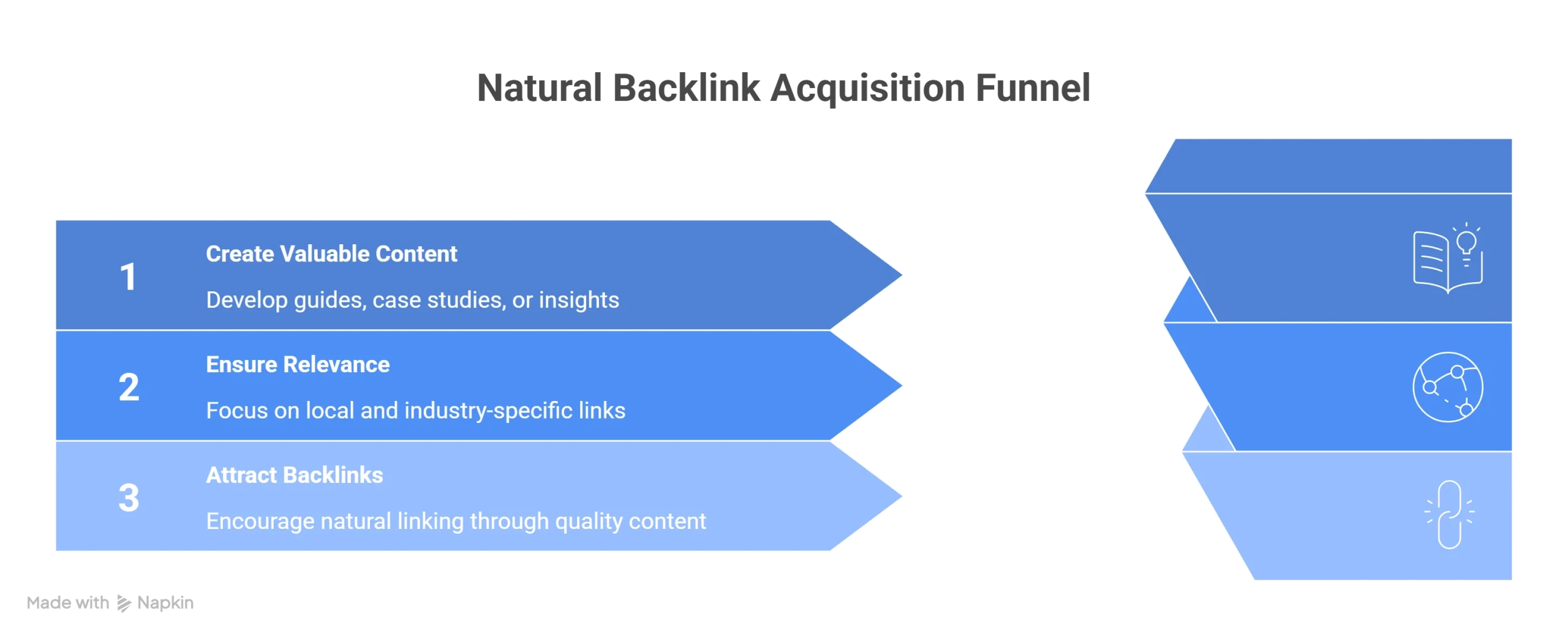
Strengthen the pages first
We improved the pages we wanted people to link to, making them clearer, more useful, and more likely to deserve attention.
Focus on relevance
Instead of aiming for volume, we focused on relevant opportunities that made sense for the business, its audience, and its location.
Earn mentions gradually
That included useful content, better link-worthy assets, selective guest posting, and relevant mentions from sources that had a genuine connection to the client’s services.
The results
The client’s stronger pages became easier to support with off-site signals, visibility improved over time, and referral opportunities increased as the site became more useful and more credible.
The main benefit was not just having more links. It was having better support around pages that already made sense for the business.
Final thoughts
Backlinks are still a useful part of SEO because they help search engines discover pages and understand relationships between websites. They can support visibility, credibility, and referral traffic, but they work best when they point to pages that already serve a clear purpose.
For most business owners, the key takeaway is simple. Backlinks matter, but they are most effective when they support a website that is already useful, relevant, and easy to understand. When you look at what backlinks are in SEO in practical terms, the real value comes from how the right links strengthen the right pages.
That is why my approach to Bristol SEO treats backlinks as one part of the wider picture, alongside content, technical health, site structure and search intent.


FAQs
01
What is the difference between a backlink and an internal link?
A backlink comes from another website and points to your site. An internal link moves a visitor from one page to another on your own website. Both help SEO, but backlinks usually support trust and discovery from outside your site, while internal links help structure and navigation within it.
02
Do backlinks still help rankings in 2026?
Yes, but they are only one part of the picture. Google still uses links as a signal, but rankings also depend on content quality, search intent, technical SEO, and the overall usefulness of the page.
03
How can a small business get backlinks naturally?
The short answer is by having something worth mentioning and by being visible in the right places. Useful guides, strong service pages, local partnerships, trade associations, and relevant coverage can all help create natural link opportunities.
04
Are directory links still useful for SEO?
They can be, if the directory is relevant, trustworthy, and genuinely useful to users. A good industry directory or local citation source can make sense, but low-quality directories created only for links are rarely helpful.
05
Can bad backlinks hurt my website?
Poor-quality backlinks can create a messy link profile and, at best, waste your time. Google’s systems are designed to ignore or reduce the value of spammy links, so chasing manipulative links is usually a poor investment.
Author Bio

Fred Morpeth
Table of Contents